
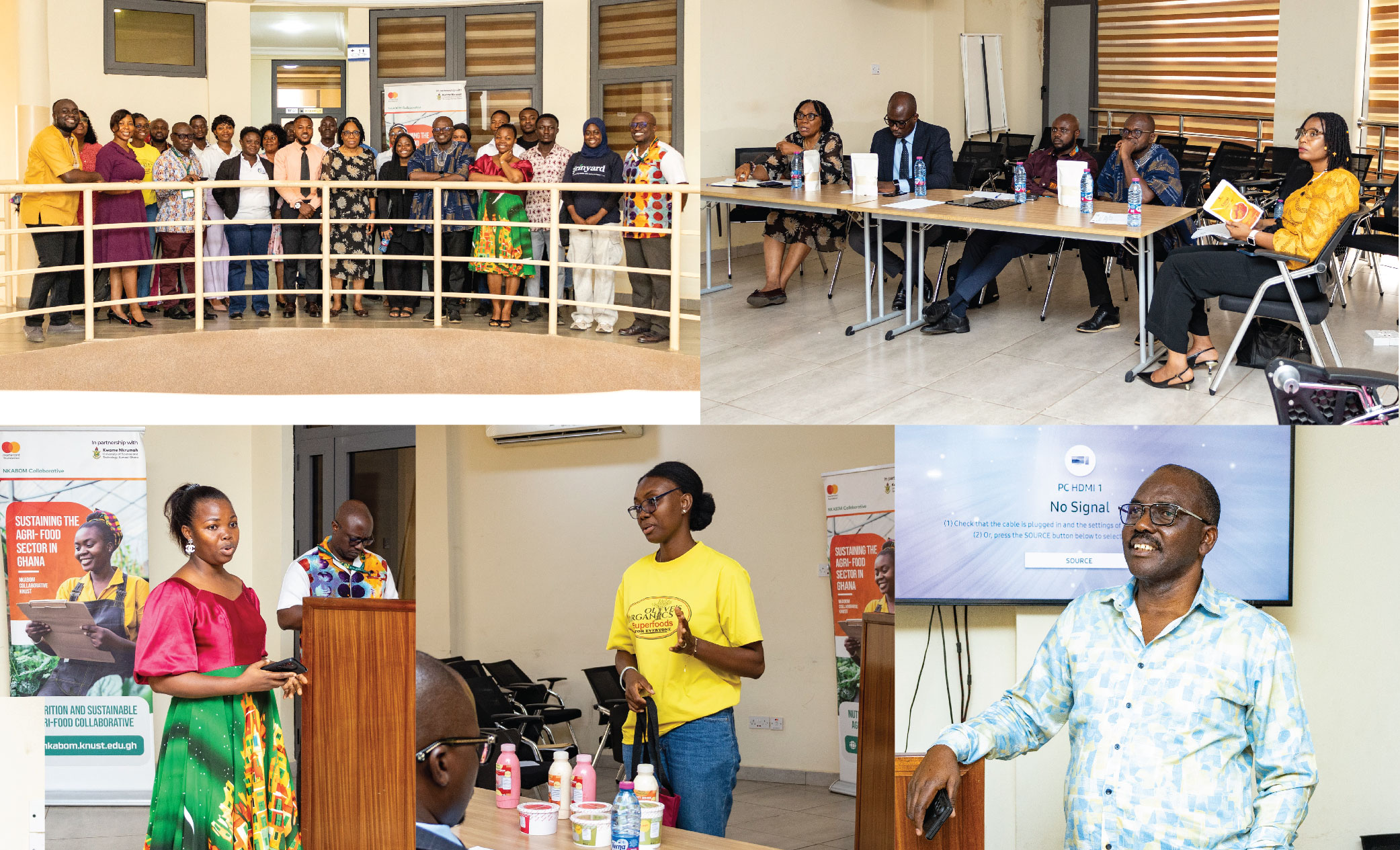
The Kwame Nkrumah University of Science and Technology (KNUST), Kumasi Nutrition and Sustainable Agri-food Collaborative, in partnership with the Mastercard Foundation (Nkabom Collaborative), has shortlisted 30 youth-led business ideas for a funding pitch, opening a new pathway for unemployed and underemployed young people to access start-up support.
The opportunity was extended to beneficiaries who had participated in training programmes organised by the project. Following a competitive call, more than 90 applications were received, with 30 ventures selected to advance to the pitching stage.
Opening the pitching session, the project’s principal investigator, Prof. William Otoo Ellis, described the initiative as a “stepping stone” and a catalyst for long-term transformation rather than a short-term intervention.
He urged participants to view the programme as part of a broader journey requiring planning, resilience and purposeful action.
“Some of these opportunities that come our way are stepping stones. Sometimes they serve as catalysts for change, change that is not only about us, but change that reflects the bigger picture,” he said.
Prof. Ellis also challenged participants to approach the process with integrity, stressing that conviction and honesty should underpin both their presentations and entrepreneurial ambitions. “Let integrity and truth be our guide, not just saying nice things when within our hearts we do not believe in them,” he added.
The entrepreneurship pillar lead, Prof. Wilberforce Achiaw Owusu-Ansah, said the programme operates a “No Closed Door Policy,” ensuring that applicants who do not receive immediate funding will continue to benefit from mentorship and capacity-building support.
He explained that the Nkabom Collaborative’s funding model prioritises impact and sustainability over direct cash disbursement.
“The money is not coming to your pockets. We will work with you, visit your sites, negotiate, and help put all the structures in place. You are literally walking into the business and starting it,” he said.
Prof. Owusu-Ansah added that judges assess the viability and scalability of business models rather than presentation skills alone, with extended one-on-one sessions designed to fully understand each venture’s implementation needs.
By: Michael Kwawu


